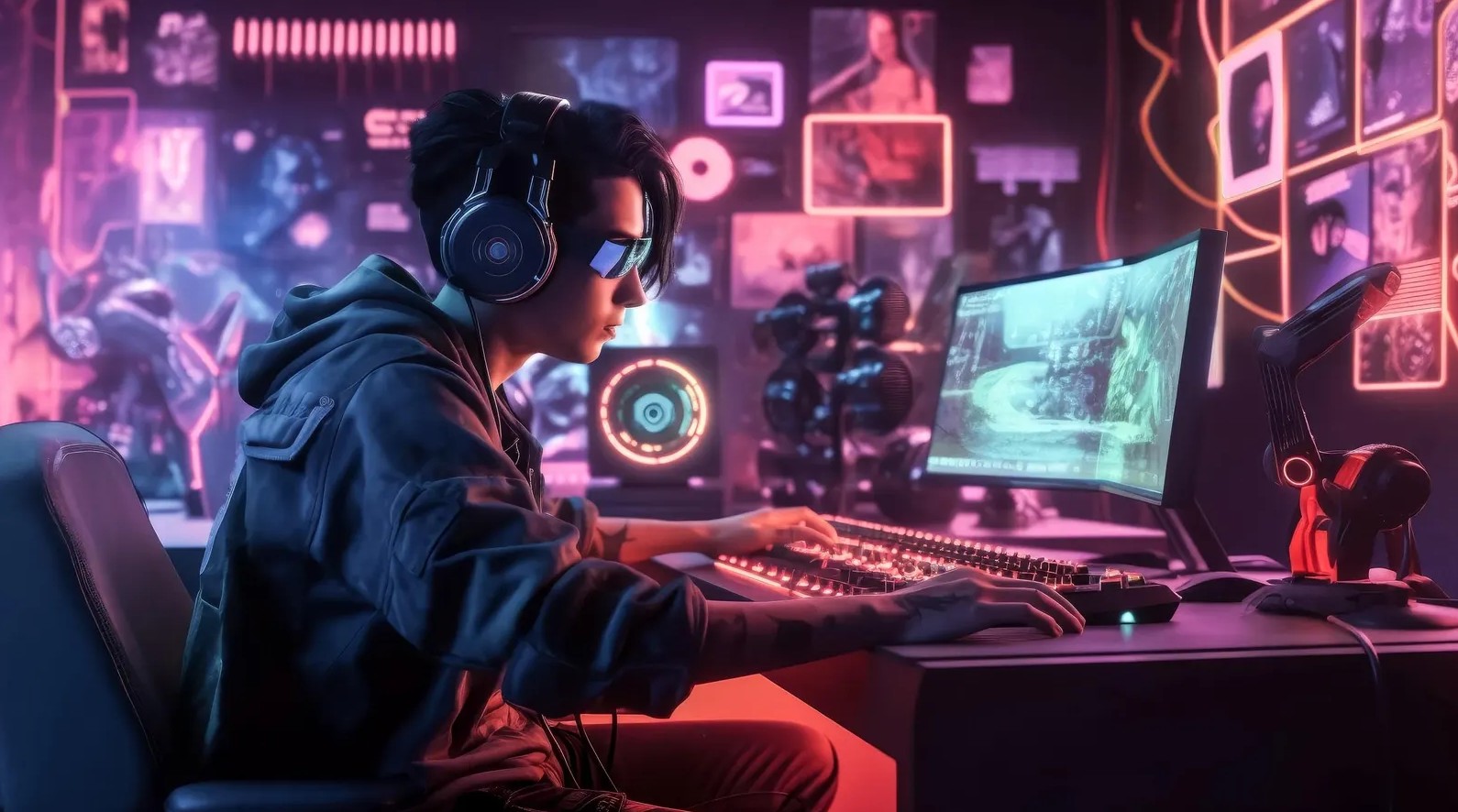
The online slot depo 5k industry is evolving faster than ever. From casual mobile experiences to professional esports, the way people play, connect, and compete is transforming. The future of online gaming promises immersive experiences, cutting-edge technology, and social integration that will redefine entertainment globally. Understanding these trends gives players, developers, and investors a clear picture of what’s next in digital gaming.
Immersive Experiences
Virtual reality (VR) and augmented reality (AR) are no longer futuristic concepts—they are actively shaping the gaming landscape. With devices like Meta Quest 3 and PlayStation VR2, players can enter worlds that feel tangible, interacting with environments and characters in real-time.
These immersive experiences create deeper engagement, allowing gamers to explore, create, and collaborate like never before. The line between gaming and reality blurs, opening doors to interactive storytelling, training simulations, and live virtual events.
Cloud Gaming Rise
Cloud gaming is eliminating the need for high-end hardware. Services like NVIDIA GeForce Now, Xbox Cloud Gaming, and Google Stadia (despite past challenges) are enabling players to stream high-quality games on any device with internet access.
This accessibility lowers barriers to entry and expands the player base globally. Gamers no longer need expensive consoles or gaming PCs, making premium experiences available everywhere, from smartphones to laptops.
Esports Expansion
Competitive gaming, or esports, is growing into a multibillion-dollar industry. Major tournaments like The International for Dota 2 and League of Legends World Championship are drawing millions of viewers and offering substantial prize pools.
The future will see more professionalization, with sponsorships, team management, and global leagues resembling traditional sports. As the audience grows, esports will continue merging entertainment, competition, and community, creating new career paths and economic opportunities.
AI Integration
Artificial intelligence (AI) is transforming game design, personalization, and gameplay. AI-driven NPCs (non-player characters) can react dynamically, creating challenges that adapt to each player’s skill level.
AI also helps in content generation, procedural world-building, and even predictive analytics for competitive play. Personalized recommendations, adaptive difficulty, and smarter matchmaking will make future gaming more engaging, challenging, and fair.
Social Gaming Shift
Online gaming is increasingly a social experience. Platforms like Roblox, Fortnite, and Minecraft allow players to interact, build communities, and create content collaboratively.
Future trends emphasize social connectivity, with integrated voice chat, live events, and shared experiences across platforms. Gaming will not just be about playing—it will be about community, identity, and shared adventures.
Mobile Dominance
Mobile slot depo 1k continues to dominate in terms of users and revenue. Titles like Genshin Impact and Call of Duty Mobile prove that mobile devices can deliver console-level experiences.
The future will focus on cross-platform play, enabling gamers to switch seamlessly between mobile, PC, and console without losing progress. This creates a unified gaming ecosystem where convenience and quality converge.
Blockchain and NFTs
Blockchain technology introduces digital ownership, NFTs, and play-to-earn models. Players can own unique in-game assets, trade them on marketplaces, and even earn real-world rewards.
While still controversial, this trend may redefine in-game economies, giving players more control and incentivizing engagement. Future games might merge entertainment and finance, offering new opportunities for both players and developers.
Adaptive Storytelling
Narrative-driven games are evolving into dynamic, player-driven stories. AI and machine learning allow narratives to adapt to choices, creating unique outcomes for every playthrough.
This evolution makes storytelling more immersive, giving players the sensation that the world responds to their decisions. From RPGs to adventure games, the line between author and player continues to blur.
Sustainability and Ethics
As gaming grows, environmental and ethical considerations are gaining attention. Cloud servers, hardware production, and energy consumption pose challenges. Developers are exploring eco-friendly designs, energy-efficient servers, and sustainable practices.
Additionally, inclusivity and accessibility are priorities. Games are becoming more accessible to diverse players, including those with disabilities, ensuring that the future of gaming is both innovative and responsible.
Conclusion: A Connected Future
The future of online gaming is immersive, social, and globally connected. VR/AR, cloud gaming, AI-driven experiences, and mobile integration are redefining how games are played and experienced. Esports, blockchain, and adaptive storytelling will continue to shape engagement, while social connectivity and sustainability ensure gaming remains inclusive and forward-thinking.
In the years ahead, online gaming won’t just be entertainment—it will be a digital ecosystem where creativity, technology, and community intersect. Players and developers who embrace these trends will lead the charge into a revolutionized, boundary-pushing era of interactive entertainment.